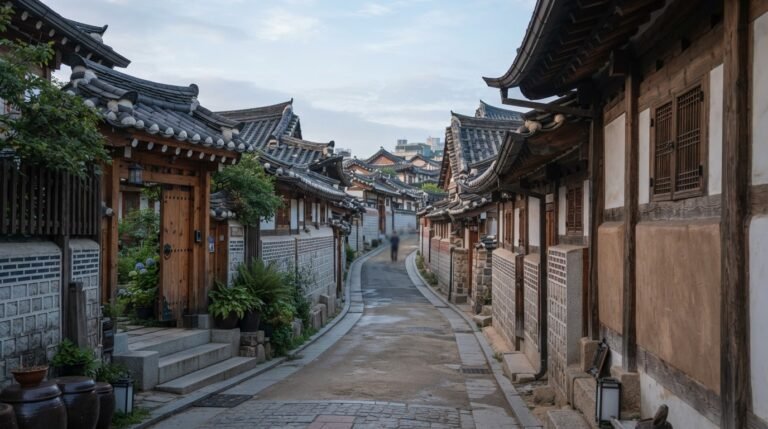
Gunwi, Korea: Sayuwon Garden, Mountain Views and Car Camping on a Slow Road Trip from Daegu
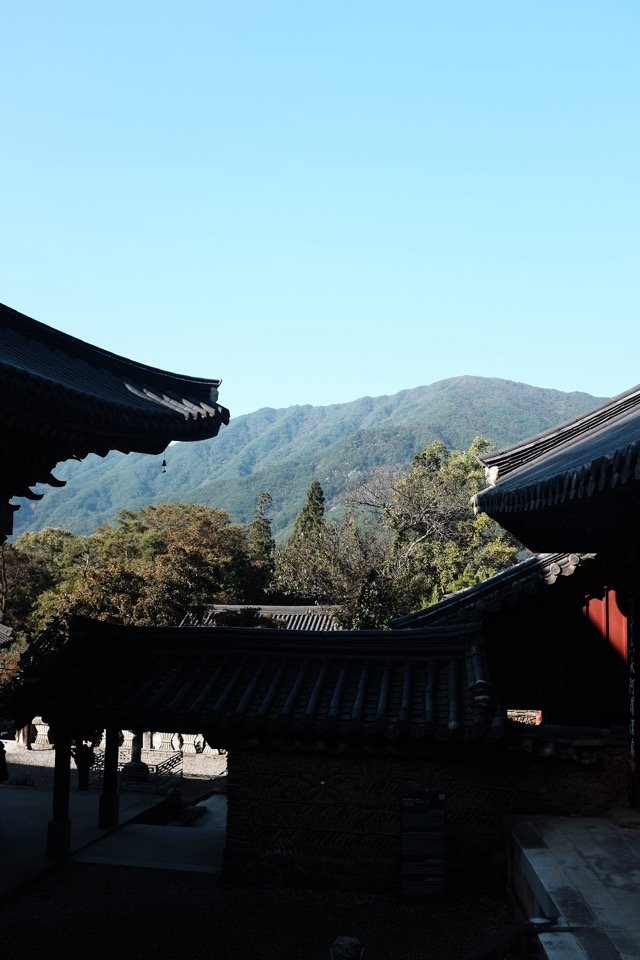
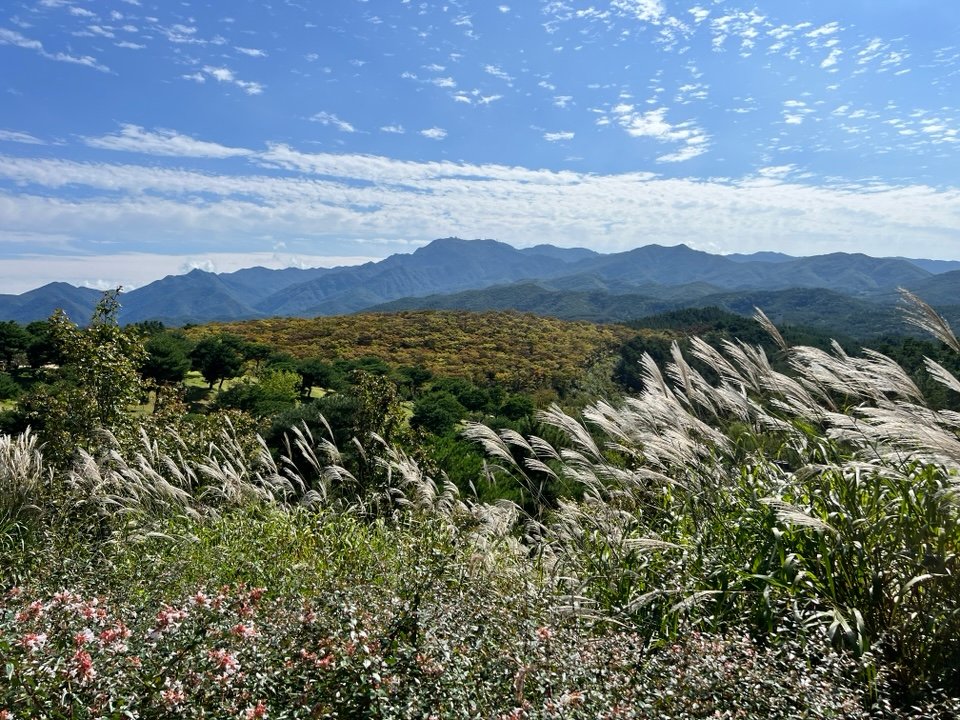
Gunwi is the kind of place most visitors to Korea never hear about. It sits just over Palgongsan Mountain from Daegu, a quiet county of orchards, rivers, stone-walled villages and long mountain ridges. There are no big sights and no crowds. What it has instead is space: a garden built for thinking, a mountaintop village above the clouds, and empty roads that make it one of the best places in Korea to slow down, preferably with your own car and a night under the stars.
This guide covers Sayuwon, the architecture garden that is Gunwi’s main draw, plus the nature spots, villages and car-camping options that make it worth a full road trip from Daegu or Seoul.
Quick facts
| Gunwi (군위) | |
|---|---|
| Where | North of Daegu, on the far side of Palgongsan Mountain. Part of Daegu Metropolitan City since July 2023 (formerly Gyeongsangbuk-do) |
| Best for | Slow travel, architecture, mountain views, car camping |
| Getting around | A rental car is essentially required; local buses are infrequent |
| Nearest rail hub | Dongdaegu Station (KTX from Seoul) |
| Time needed | One full day; two days with an overnight stay or car camping |
| Must-see | Sayuwon (reservation required, closed Mondays) |
Why visit Gunwi?
Most travelers who reach Daegu either stay in the city or head east to Gyeongju. Gunwi goes the other way, into the hills. It’s a rural county with a small population, and that is exactly its appeal. The air is clean, the views are wide, and you can drive for half an hour without hitting traffic.
Gunwi is also known in Korea as the land of the Samguk Yusa (Memorabilia of the Three Kingdoms), the 13th-century history compiled by the monk Iryeon at Ingaksa Temple here. Add a world-class garden designed by some of the best architects working today, and you have a place that feels both very old and quietly modern.
Above all, Gunwi is a place for healing in the Korean sense of the word, hilling: switching off, walking slowly and letting the landscape do the work.
Sayuwon: a garden made for thinking
Sayuwon (사유원) opened in November 2021 in Bugye-myeon, on the northern slopes of Palgongsan. Legally it’s an arboretum, but that undersells it. The name means “garden of contemplation,” and the whole site is designed around how you feel as you walk through it rather than around a collection of plants.
The garden began with one collector’s decades-long effort to gather and protect old trees, including a group of Chinese quince (mogwa) trees that had been taken to Japan and were bought back and replanted on these hills. Over the years, architects Álvaro Siza (the Portuguese Pritzker Prize winner), Seung H-Sang and Choi Wook, together with landscape architect Jung Young-sun, shaped buildings and gardens into the forest.
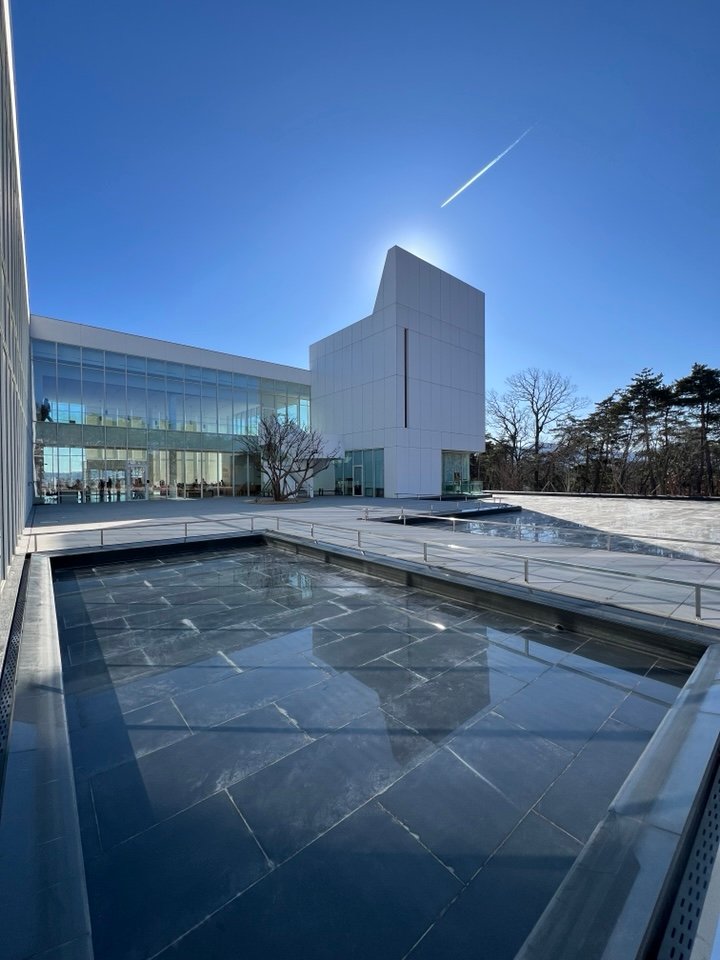
As an architect, I’d put it simply: this is one of the best places in Korea to see how buildings can step back and let the landscape lead. Concrete, stone, water and sky do almost all of the talking.
What to see
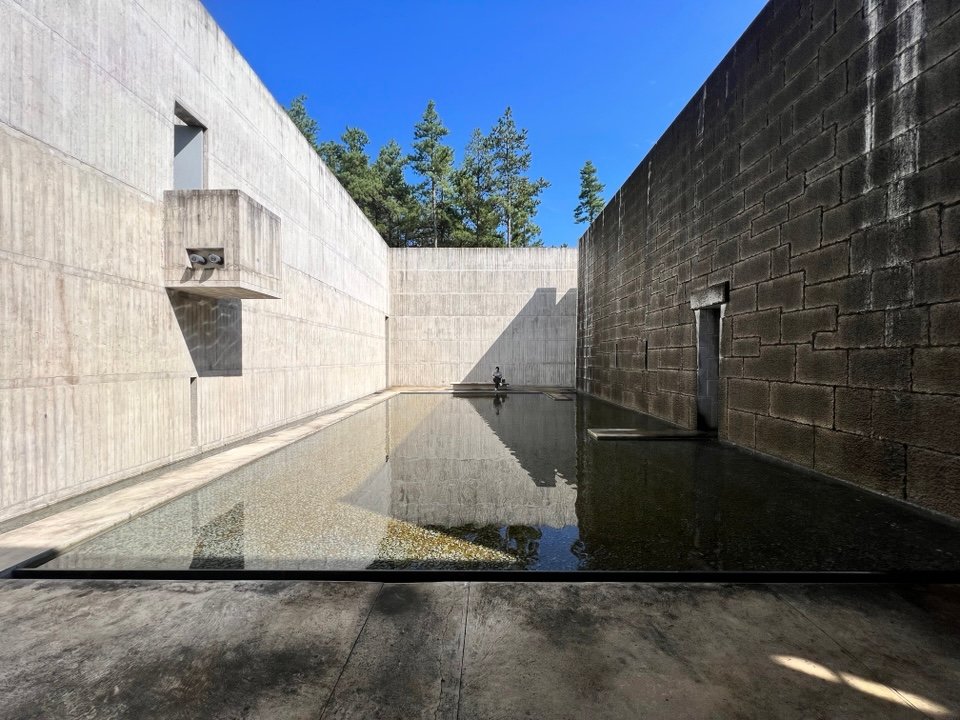
- Myeongjeong (명정): Seung H-Sang’s meditation space, a long walled courtyard of board-marked concrete and rough stone around a still pool. Walk in, sit down, and the only things left are the water, the walls and a rectangle of sky. It’s the emotional center of the garden.
- Soyoheon (소요헌): Álvaro Siza’s low, Y-shaped pavilion. It was originally designed to house Picasso’s Guernica in Madrid; that project was never built, and the design finally found a home here, half sunk into the hillside.
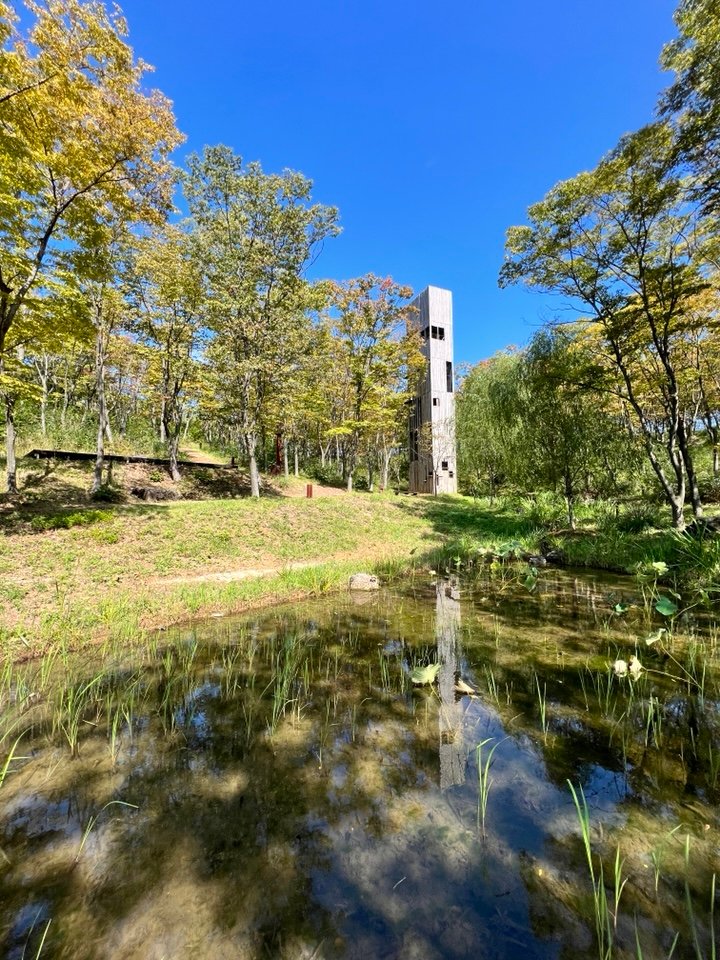
- Josa (조사): a tall, slender tower standing above a woodland pond, described by Sayuwon as a monastery for birds. Look for its reflection in the water on a still day.
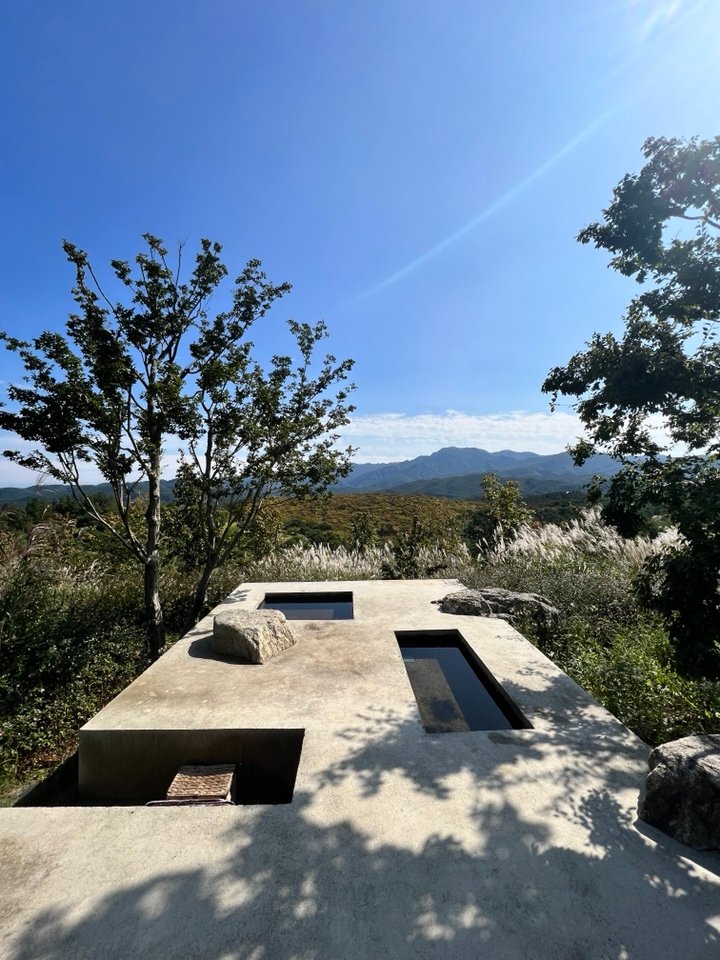
- Takjok (탁족): a rest area built around shallow water basins where you can take off your shoes and soak your feet, with the Palgongsan ridges in front of you. After a few hours of walking, it’s one of the most welcome spots in the garden.
- Pungseolgicheonnyeon (풍설기천년): the garden of old quince trees, whose name roughly means “a thousand years of wind and snow.” The trees are the reason Sayuwon exists.
- Sadam (사담): a water garden for quiet reflection, with a restaurant nearby for those who book a meal.
Between the buildings, paths wind along ridgelines with open views of the Palgongsan ranges. In autumn, silver grass fills the slopes, and the colors on the far mountains change by the hour.
Tips for visiting Sayuwon
- Book ahead on the official website (sayuwon.com). Visits are by reservation, and weekend slots go first.
- Closed on Mondays and on the Seollal and Chuseok holidays. Hours are 09:00–18:00, with last entry at 15:00.
- It’s not cheap. Admission is about ₩50,000 for adults on weekdays and ₩69,000 on weekends and holidays. Go on a weekday if you can, both for the price and the quiet.
- Wear comfortable shoes. The hills here aren’t high, but the site is large and the paths go up and down all day, so leave the fashion shoes at home. Allow at least three hours and bring water.
- Keep your voice down. Silence is part of the design, and other visitors come here specifically for it.
- Best season: autumn. If you’re in Korea from October to early November, Sayuwon should be a must on your list. Silver grass covers the slopes, the forest turns gold, and the clear autumn skies make the concrete and water glow. March, during the plum blossom festival, is another lovely time.
Gunwi’s nature: mountains, clouds and open roads
Away from Sayuwon, Gunwi is mostly mountains, farmland and sky. On a clear autumn day, the ridges roll away in every direction, with silver grass in the foreground and almost nothing man-made in sight. You don’t need a destination to enjoy it; many of the best moments here happen at a pull-off on a country road.
Hwasan Village: above the sea of clouds
Hwasan Village (화산마을) sits at around 700 meters above sea level in Samgugyusa-myeon. It was settled in 1962 as a government land-clearing village, and today it’s known for three free viewpoints: the Windmill Observatory, the Sky Observatory and the Hwasan Fortress Observatory, near the remains of a mountain fortress that was left unfinished in 1709.
On the right morning, roughly between dawn and 9 a.m., clouds fill the valleys below and the surrounding peaks rise out of them like islands. From the top you can also see Gunwi Lake, the reservoir behind Gunwi Dam. Entry and parking are free, and you can drive almost all the way up, but the road is a narrow, winding climb of about 7 km, so take it slowly, especially in the dark.
More stops worth the drive
- Gunwi Triple Rock-cut Buddha (군위 삼존석굴): a Silla-era grotto carved into a cliff, a National Treasure often called the “Second Seokguram.” It predates the famous Seokguram grotto in Gyeongju by about a century.
- Hanbam Village (한밤마을): a clan village wrapped in about 6.5 km of dry-stone walls, nicknamed the “Jeju of the mainland.” It’s a lovely, quiet walk just a few minutes from the grotto.
- Ingaksa Temple (인각사): the small temple where Iryeon compiled the Samguk Yusa, set beside a stream and a dramatic cliff.
- Hwabon Station (화본역): once called Korea’s most beautiful small station. Trains stopped running on December 20, 2024, when the Jungang Line was rerouted, but the 1930s station building and its old water tower are still open to visitors for free.
Car camping in Gunwi
Car camping, or chabak (차박), is hugely popular in Korea: you fold down the back seats of an SUV or van, roll out a mattress and sleep in the car. Gunwi is one of the best places to try it. It’s close to a major city, the nights are dark and quiet, and you can wake up already in the mountains for sunrise.
- Use a campsite. Gunwi has a number of campgrounds, including several in and around Hwasan Village, and many allow you to park beside your site. Booking a site gives you toilets, water and a legal place to stay overnight.
- Don’t just park anywhere. Viewpoint lots and village roads are not campsites. Respect local signs and residents, and take all of your trash with you.
- Rent the right car. Ask for an SUV or a minivan with seats that fold flat. Some rental companies and camping-car outfitters in Daegu also rent camping gear or campervans.
- Pack warm layers. At 700 meters, autumn and spring nights can drop close to freezing even when Daegu feels mild.
- Respect quiet hours. Most Korean campsites enforce “manner time” from around 22:00, so keep music and voices low.
How to combine them: a simple two-day plan
- Day 1 morning: take an early KTX from Seoul to Dongdaegu and pick up your rental car.
- Day 1, late morning to afternoon, Sayuwon: drive over Palgongsan and spend three or four hours in the garden (book your slot in advance).
- Day 1 late afternoon: stop at the Triple Rock-cut Buddha and walk the stone walls of Hanbam Village, both close to Sayuwon.
- Day 1 evening: drive up to Hwasan Village, check in to a campsite or guesthouse and watch the sunset from the observatories.
- Day 2 dawn: walk up to the Sky Observatory for sunrise and, with luck, a sea of clouds.
- Day 2 morning: visit Ingaksa Temple and Hwabon Station on the way back, then return the car in Daegu.
Getting there
From Seoul: take the KTX from Seoul Station or Suseo Station (SRT) to Dongdaegu Station, about two hours. There are several car rental offices in and around the station, and this is the easiest place to pick up a car. From Dongdaegu, Sayuwon is roughly an hour’s drive over Palgongsan, and Hwasan Village about an hour and a half.
Why you need a car: Gunwi’s sights are spread across a large rural county, and buses are few and far between. Sayuwon and Hwasan Village in particular are very hard to reach without your own wheels. To rent a car in Korea as a foreign visitor, you’ll need an International Driving Permit along with your home license and passport; check the requirements with your rental company before you travel.
Navigation: Google Maps driving directions are limited in Korea, so use a local app. See our Naver Map and KakaoMap guide, and make sure you have data with an eSIM or local SIM.
Frequently asked questions
Do I need a reservation for Sayuwon?
Yes. Book through the official website before you go, especially for weekends. It’s closed on Mondays, and the last entry is at 15:00.
Can I visit Gunwi without a car?
Technically, yes, but it’s hard. Rural buses are infrequent and don’t reach most of the places in this guide. A rental car from Daegu is by far the best option, and a taxi to Sayuwon is the fallback if you only want to see the garden.
Is Gunwi good for car camping?
Very. It’s quiet, dark at night and close to Daegu, with campsites near Hwasan Village where you can wake up at 700 meters for sunrise. Stay at a proper campsite rather than parking overnight at viewpoints.
When is the best time to visit Gunwi?
Mid-October to early November for silver grass, autumn color and clear skies; March for plum blossoms at Sayuwon; and early mornings in any season for the sea of clouds at Hwasan Village.
Final thoughts
Gunwi doesn’t try to impress you, and that’s the point. Spend a morning listening to water in a concrete courtyard, an afternoon walking between stone walls, and a night in the back of your car under a sky full of stars, and you’ll leave feeling lighter than when you arrived. If you’re looking for a side of Korea that’s about rest rather than sightseeing, rent a car in Daegu and head over the mountain.
For reservations and current prices, see Sayuwon’s official website. The Korea Tourism Organization has broader travel planning resources. For another slow-paced regional trip, read our Hadong guide.
Information reviewed: November 23, 2026. Opening hours, admission and reservation rules change, so confirm them on official sources before you travel.