Gwangjang Market, Seoul: What to Eat, Prices and How to Avoid Overpaying (2026)
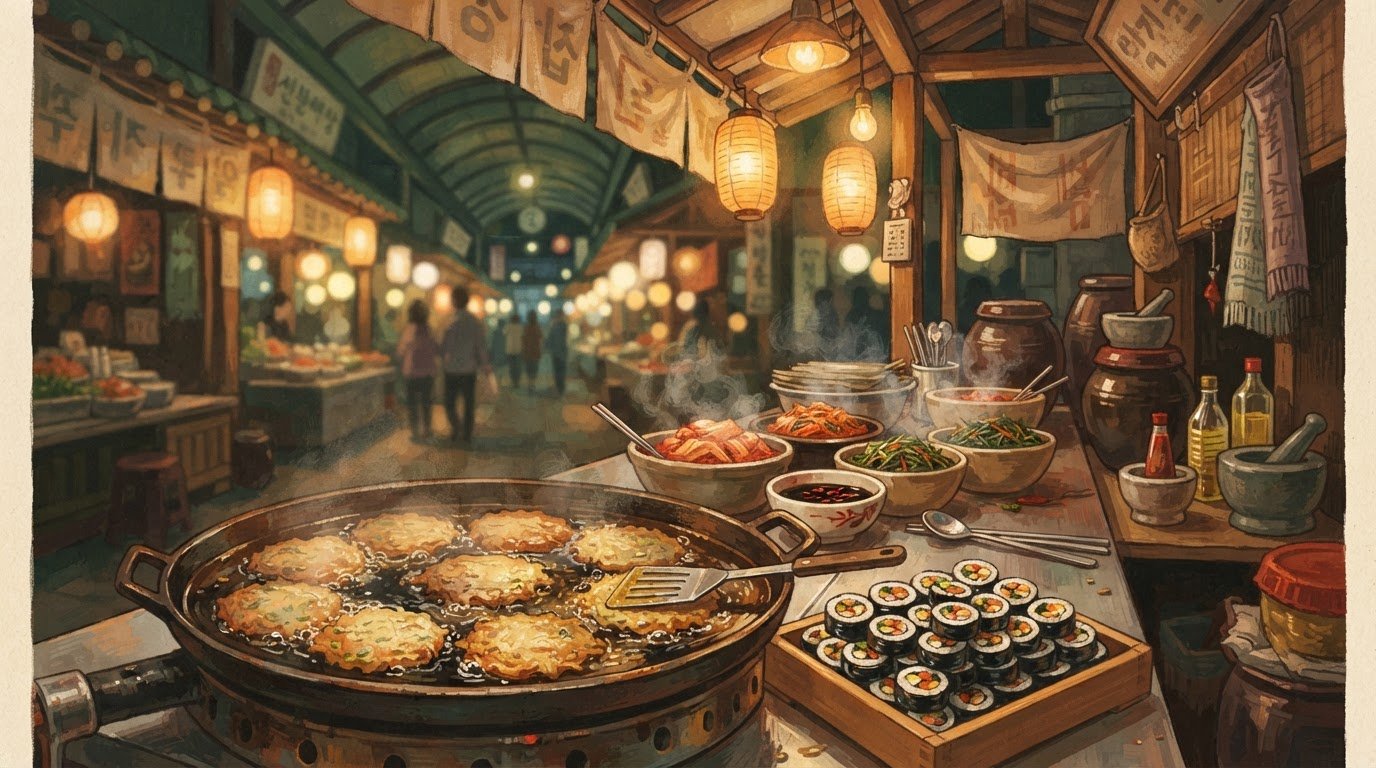
Gwangjang Market is noise, steam and sizzling oil: griddles of mung bean pancakes, trays of tiny rice rolls, and long benches where strangers squeeze in shoulder to shoulder. Opened in 1905, it is one of Seoul’s oldest markets and still its best place to eat everyday Korean comfort food in one covered hall. It has also had a well-publicized problem with some stalls overcharging visitors. This guide covers what to eat, what it should cost and how to enjoy the market without overpaying.
At a glance
| Where | 88 Changgyeonggung-ro, Jongno-gu; Jongno 5-ga Station (Line 1), Exit 8 |
| Food alley hours | Roughly 09:00–23:00 daily; individual stalls open and close at different times |
| Budget | About 15,000–30,000 won per person for a filling meal of several dishes |
| Time needed | 60 to 90 minutes |
| Best for | Street food, atmosphere, a casual dinner with drinks |
A local’s tip: Gwangjang Market is a genuinely fun place. In its noisy, energetic atmosphere you can eat and enjoy all kinds of casual Korean food. But you must watch out for overcharging. Walk around, compare a few stalls and their prices, and only then sit down to eat.
What to eat
| Dish | What it is | Typical price |
|---|---|---|
| Bindaetteok (빈대떡) | Thick, crisp mung bean pancake, fried to order | About 5,000–6,000 won each |
| Mayak gimbap (마약김밥) | Finger-sized rice rolls with a mustard-soy dip | About 3,000–5,000 won a plate |
| Yukhoe (육회) | Seasoned raw beef with pear and egg yolk | About 15,000–22,000 won, enough for two |
| Kalguksu (칼국수) | Hand-cut noodles in a light broth | About 6,000–7,000 won |
| Tteokbokki, sundae, mandu | Spicy rice cakes, Korean sausage, dumplings | About 3,000–6,000 won |
Start with bindaetteok, the market’s signature: watch the mung beans being ground and fried in front of you, and eat it hot with soy sauce and pickled onion. Add a plate of mayak gimbap to share, then choose one bigger dish. Yukhoe is the local favorite, but it is raw, so skip it if you are pregnant, immunocompromised or traveling with young children. A bowl of kalguksu is the comforting alternative.
How to avoid overpaying
In recent years, Korean media and visitors have reported stalls charging more than their listed prices, shrinking portions or adding unlisted charges, and the city and district have responded with inspections and new rules. Most stalls now display unified green signboards and price lists in Korean, English, Chinese and Japanese. The great majority of vendors are honest, but a few simple habits protect you:
- Walk the whole food alley first. Many stalls sell the same dishes; compare prices and portions before you sit down.
- Order from the posted menu only, and point to the item and price as you order.
- Ask “Eolmayeyo?” (얼마예요?), “How much is it?”, for anything that is not clearly priced, including drinks.
- Check whether the price is per portion or per set when you are sharing.
- Look at the bill before paying, and ask for an itemized total if it does not match what you ordered.
- If something goes wrong, note the stall number and report it to the market’s customer service office or the 1330 Korea Travel Hotline.
How ordering works
Most food stalls are a counter with a bench around the cooking area. Sit down at the stall you have chosen and order directly from the cook. Pointing works fine; “Igeo hana juseyo” (이거 하나 주세요) means “One of this, please.” You pay at the stall when you finish. Cards are widely accepted, but carry some cash for smaller vendors. If you are sharing a table, keep bags off the bench so others can sit.
Best times to go
Weekday mid-afternoon, between about 14:00 and 17:00, is the calmest time and the easiest for comparing stalls. Evenings and weekends are louder and more crowded, with office workers and tour groups filling every bench, which is part of the fun if you want the full atmosphere with makgeolli or soju.
Where to go afterward
Walk west along Cheonggyecheon Stream toward Gwanghwamun, which takes about 30 minutes; in December and January it is lined with the lanterns of the Seoul Winter Festival. Jongmyo Shrine is a few minutes’ walk north. For a quieter market on another day, read our Mangwon Market and Hangang Park guide.
Frequently asked questions
Is Gwangjang Market worth visiting?
Yes. It is one of the most lively and affordable places to try classic Korean street food in one place. Just compare prices before you sit down.
How much does a meal at Gwangjang Market cost?
A bindaetteok and a plate of mayak gimbap cost around 8,000–11,000 won. A fuller meal with yukhoe or noodles and a drink comes to roughly 15,000–30,000 won per person.
Is it safe to eat yukhoe?
Yukhoe is raw beef. Most healthy adults eat it without problems at busy, high-turnover stalls, but pregnant travelers, young children and anyone with a weakened immune system should choose cooked dishes instead.
How do I get to Gwangjang Market?
Take subway Line 1 to Jongno 5-ga Station and use Exit 8. It is also about a 30-minute walk along Cheonggyecheon Stream from Gwanghwamun.
For current access information, see the official Visit Seoul listing. To pay for the subway, see our Tmoney vs Climate Card guide.
Information reviewed: November 24, 2026. Prices and stall hours change; always check the posted menu before ordering.