Onyang Folk Museum, Asan: Korea’s First Private Folk Museum and Itami Jun’s First Building in Korea (2026)
Most travelers pass Asan on the KTX without a second thought. That’s a mistake. About an hour south of Seoul, this hot-spring city is home to one of Korea’s most underrated museums: the Onyang Folk Museum (온양민속박물관), the country’s first private folk museum, set inside a large, quiet park, with a building by the architect Itami Jun that design lovers travel across Korea to see.
At a glance
| What it is | Korea’s first private folk museum (opened 1978), with around 20,000 objects of everyday Korean life |
| Best for | A calm park walk, traditional culture, architecture |
| Hours | 10:00 to 17:30 (last ticket 16:30) |
| Closed | Mondays (open if Monday is a public holiday), January 1, Seollal and Chuseok days |
| Admission | Adults 8,000 won; youth 5,000 won; children 4,000 won; seniors 65+ and visitors with disabilities 1,000 won |
| Time needed | 1 to 2 hours, longer if you linger in the park and café |
| Getting there | Subway Line 1 or KTX to Onyangoncheon Station, then about 5 minutes by taxi |
| Parking | Free |
| Address | 123 Chungmu-ro, Asan-si, Chungcheongnam-do (충남 아산시 충무로 123) |
Why visit Onyang Folk Museum?
The museum opened in 1978 to show the beauty of Korea’s traditional culture. Its grounds cover about 72,700 square meters, with main exhibition halls, special exhibition spaces, an outdoor exhibition area and a wide garden. The collection of around 20,000 objects focuses on how ordinary Koreans actually lived: farming tools, kitchenware, furniture, clothing, ritual objects and crafts.
Unlike the big national museums in Seoul, it’s calm. The whole museum sits inside a large park, so a visit is as much a slow walk under the trees as it is a museum trip.
A local’s tip: Onyang Folk Museum is set in a surprisingly big park, and walking the grounds is what I remember most. It’s genuinely calming. Every season is good here, so there’s no wrong time to go.
What to see
The main exhibition halls
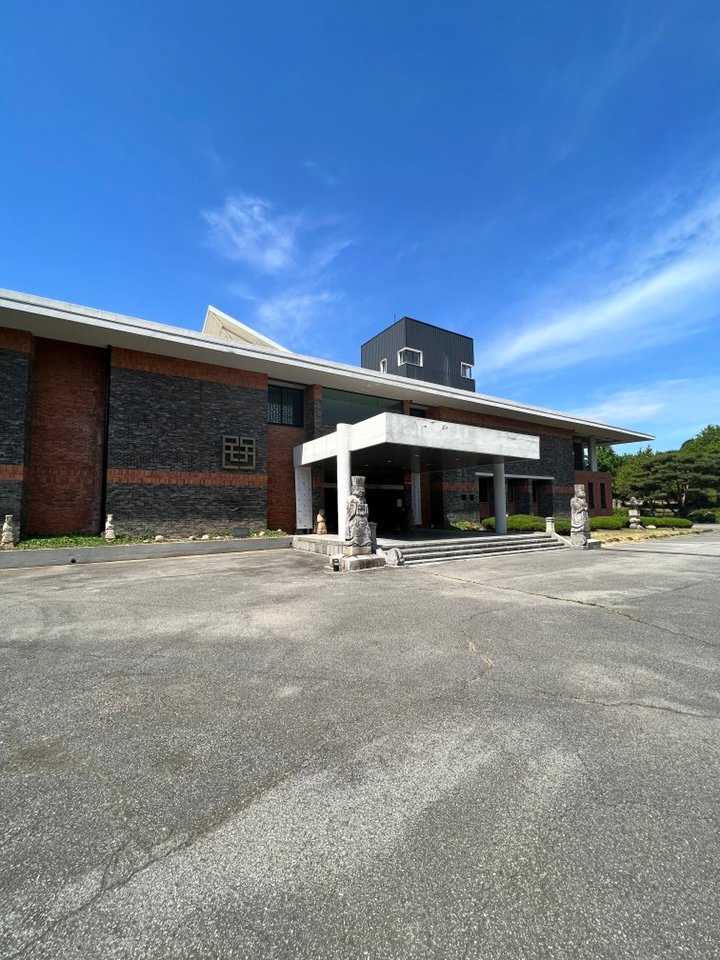
The permanent galleries tell the story of everyday life in modern Korea: the tools, furniture, clothing and rituals ordinary families actually used. It’s an interesting exhibition and one I’d recommend, especially if you want context for the objects you’ll see later in hanok villages and K-dramas.
A recent highlight: in March 2026, a Joseon-era suit of armor and helmet from the museum’s collection was upgraded to a National Folklore Cultural Heritage, praised for its dragon shoulder ornaments and silver-inlaid helmet.
The park and outdoor exhibits
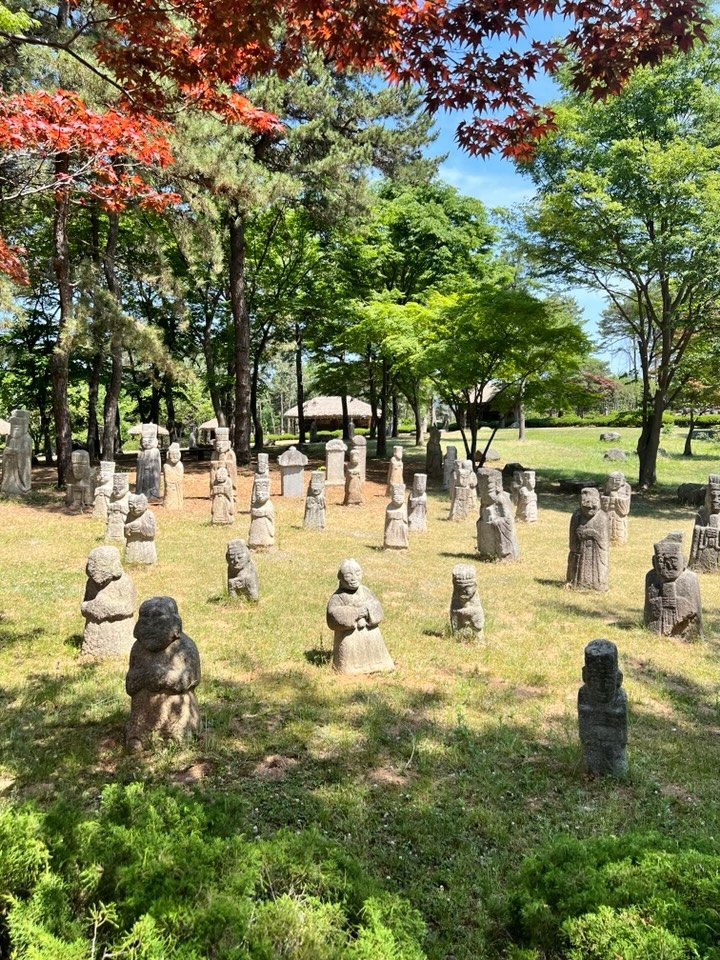
Outside, traditional houses, millstones, sauce-jar terraces and rows of old stone figures are spread through a wooded garden. Give yourself time here; the paths are the best part of the visit.
Gujeong Art Center (구정아트센터)
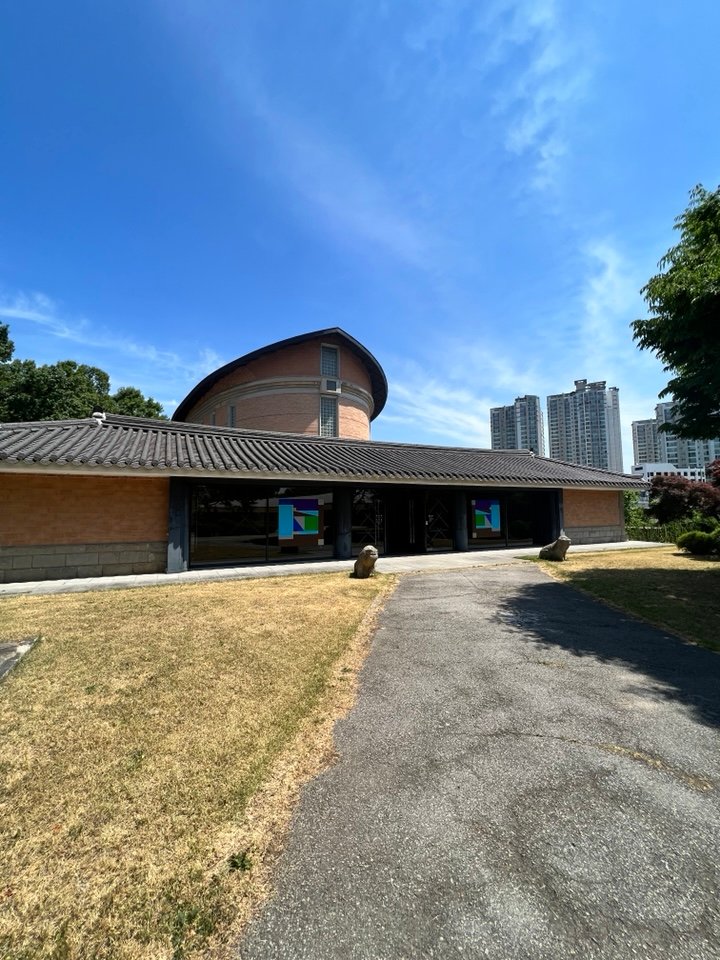
The museum’s most famous building, designed by Itami Jun and completed in 1982. It hosts special exhibitions, performances and events, so check what’s on before you go.
Saitjip pavilion (사잇집)
A small new garden pavilion of about 39 square meters sits between Itami Jun’s art center and the main building. It’s kept lower than the nearby thatched houses so it blends into the landscape. It hosts occasional craft exhibitions; on other days it’s simply a shelter where anyone can rest.
The museum café
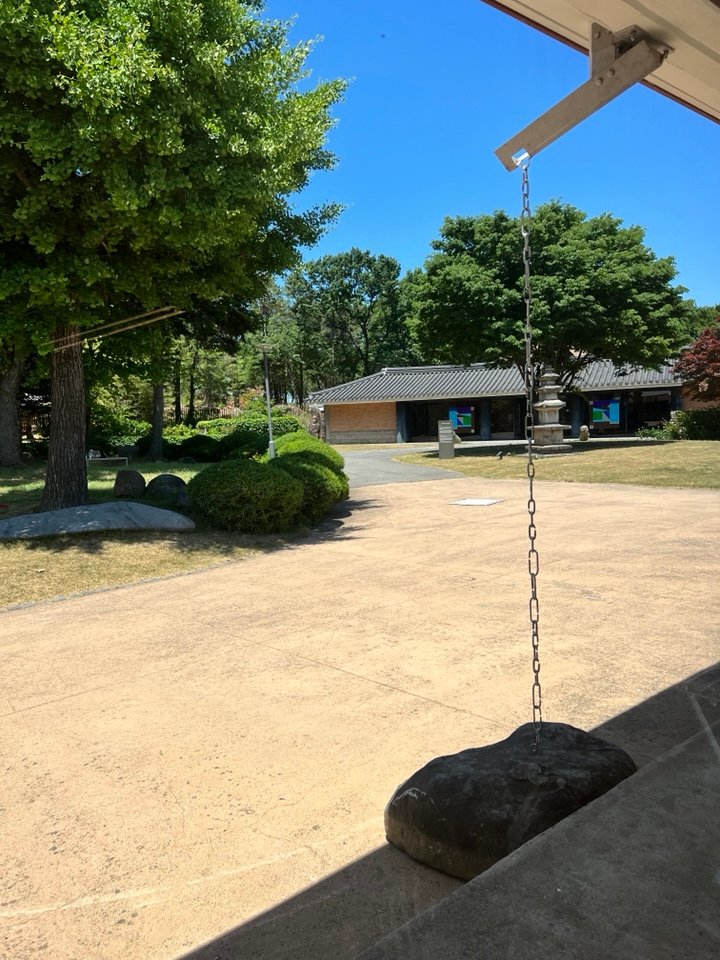
Café Onyang, with an interior by designer Lim Tae-hee, looks out over the garden toward the Gujeong Art Center. It’s a good place to finish the visit with a coffee.
An architect’s view: three answers to “What is Korean?”
Itami Jun (Korean name Yoo Dong-ryong, 1937 to 2011) was a Japan-born Korean architect best known abroad for his museums on Jeju Island. Fewer visitors know that his first building in Korea is here in Asan.
- The roof. Its curves are often compared to a turtle shell, a nod to the turtle ships of Admiral Yi Sun-sin, whose shrine, Hyeonchungsa, is nearby.
- The stone. The walls use stone found around Asan, so the building feels rooted in the land rather than placed on top of it.
- The light. There’s almost no decoration. The interior lets light and air do the work, and the central hall feels closer to a meditation space than a gallery.
The main exhibition building next door was designed by architect Kim Seok-chul, and the café interior by Lim Tae-hee. Together with the new Saitjip pavilion, they show several generations of Korean designers working in the same garden.
A local’s tip (an architect’s take): As an architect, what I find most interesting here is how Korean identity was translated into modern and contemporary architecture. Kim Seok-chul’s main building, Itami Jun’s art center and Lim Tae-hee’s café interior each answer that question differently. Walk between them and compare.
If you enjoy architecture-led trips, see also our Gangneung guide with its Richard Meier museum.
Hours and admission (2026)
| Item | Details |
|---|---|
| Opening hours | 10:00 to 17:30 |
| Last ticket | 16:30 |
| Closed | Every Monday (open if Monday is a public holiday), January 1, Seollal and Chuseok days |
| Adults | 8,000 won |
| Youth | 5,000 won |
| Children (elementary and kindergarten) | 4,000 won |
| Seniors 65+ and visitors with disabilities | 1,000 won |
| Groups of 20 or more | 1,000 won off per person |
Don’t go on a Monday. Both the museum and nearby Hyeonchungsa Shrine close on Mondays, which would wreck an Asan day trip.
How to get to Onyang Folk Museum
By subway
Take Seoul Subway Line 1 toward Sinchang and get off at Onyangoncheon Station (온양온천역). It’s a long ride, around two hours from central Seoul, but it’s the cheapest option, needs no booking and is paid with your transport card. Not sure which card to get? See our Tmoney vs Climate Card guide.
By KTX
For a faster trip, take the KTX to Cheonan-Asan Station, transfer to Line 1 at the connected Asan Station, and ride to Onyangoncheon.
From Onyangoncheon Station to the museum
The museum is about 2 km from the station. A taxi takes about 5 minutes, and local buses also stop nearby; check routes in Naver Map or KakaoMap. Parking is free if you drive.
A one-day Asan route from Seoul
| Time | Stop | Notes |
|---|---|---|
| 10:00 | Onyang Folk Museum | Arrive at opening for the quietest park |
| 12:00 | Lunch at Sonamu-jip (소나무집) | Korean set meal (hanjeongsik) right across from the museum |
| 13:30 | Hyeonchungsa Shrine | Shrine to Admiral Yi Sun-sin; free; closed Mondays; 9:00 to 17:00 November to February, 9:00 to 18:00 March to October |
| 15:30 | Gokgyocheon Ginkgo Tree Road | A 2.2 km road lined with about 350 ginkgo trees; free and always open; golden in autumn |
| 17:30 | Onyang Hot Springs | Soak near Onyangoncheon Station before the train home |
A local’s tip: For lunch, cross the road to Sonamu-jip (소나무집), a hanjeongsik restaurant opposite the museum. It’s an easy way to experience a generous, traditional Korean table spread.
Alternative: Swap Hyeonchungsa for Oeam Folk Village, a village of stone-walled hanok with around 500 years of history (adults 2,000 won, under-18s 1,000 won). For another easy train day out, try our Suwon day trip.
Frequently asked questions
Is Onyang Folk Museum worth visiting?
Yes, especially if you like traditional culture, architecture or a quiet walk. It’s calmer than Seoul’s museums, and Itami Jun’s Gujeong Art Center alone is worth the trip for design fans.
How long do I need?
Plan 1 to 2 hours for the museum, longer with the park and café.
Is it open on Mondays?
No. It’s closed every Monday unless that Monday is a public holiday.
Can I visit as a day trip from Seoul?
Yes. Line 1 runs directly to Onyangoncheon Station, and the KTX makes it faster.
When is the best season?
Any season works; the museum park is pleasant year-round. If you also want to see the Gokgyocheon ginkgo road at its yellowest, that’s usually late October to early November.
For exhibitions and notices, see the official Onyang Folk Museum website or the Oeam Folk Village website, or browse more day trips from Seoul.
Information reviewed: November 25, 2026. Hours, fees and exhibitions change; confirm them before you travel.